
Your Heavy Industry Procurement Office in China.
We source technical consumables, raw materials, spare parts and machinery from Chinese manufacturers for the refractory, steel, mining, cement, foundry and machining industries.
What buying from China can do for you
Lower landed cost
A qualified Chinese alternative typically lands fifteen to thirty percent below the domestic price, item by item.
Leverage in your next negotiation
A proven, priced alternative changes what you can credibly ask for when your current contract comes up for renewal.
Room to compete on price
A lower cost base lets you bid on business your current price cannot reach.
Security of supply
A qualified second source means a discontinued grade or a domestic shutdown does not stop your production.
A product under your own brand
The same factories can produce under your label, so you sell the product as your own.
Products your domestic market does not have
Sourcing directly in China surfaces items your domestic suppliers do not carry.
Two Ways to Buy in China. Both Risky.
To unlock the value described above, you need a way to actually buy in China. Most companies default to one of these two paths.
Buy direct
You carry the specification risk, the factory risk and the quality risk from several thousand kilometres away. Samples arrive perfect and production arrives different. By the time a problem is visible it is sitting in your warehouse, paid for. Your import also shows up in public customs data, so any competitor can see exactly which factory supplies you and go around you to get the same price. The advantage you paid to find becomes available to everyone who looks it up.
Buy through a generic trading company
You get a price from someone who has never seen your process, cannot read your drawing and cannot tell you why the last batch failed. When something goes wrong, they forward your email to the factory.
Two Ways to Have a Presence in China.
The better way is to be in China yourself. You can set up your own office, or you can work with Heatworth.
The engagement fee is credited in full against the purchases you go on to make. If the import proceeds, the sourcing work costs you nothing on top of the goods.
From specification to shipment
Understand the requirement
What the material does in your process, where it fails today, and the commercial constraint you are working inside.
Lock the specification
Drawings, chemistry, granulometry, standards and tolerances agreed in writing, then translated into Chinese without losing meaning.
Qualify the factory
A shortlist assessed on capability, capacity, certification and financial standing. The plant is visited before the name reaches you.
Test before you commit
Independent laboratory analysis and sample trials in your own process, so the decision rests on measurement.
Negotiate and control production
Face to face negotiation in country, then milestone follow up and pre shipment inspection. Problems surface in the factory while they are still cheap to fix.
Ship and report
Documentation, coordination with your logistics and customs partners, and status reporting until the goods physically leave China.
What sits behind a Heatworth quotation
The technical side
We read the drawing. Specifications, chemistry, granulometry, tolerances and standards are agreed in writing and translated into Chinese without losing meaning. Supplier claims are verified by chemical and physical analysis at independent Chinese laboratories, and you receive the raw report. Samples are trialled in your own process before you commit to volume.
The commercial side
Price is one line inside a landed cost. We negotiate payment terms, incoterms and currency, classify the goods correctly, and consolidate shipments from several suppliers into one export so you clear customs and pay freight once instead of several times. We work with partners in your country on the tax and logistics structure of the import, so it lands in a way that protects your margin. Where Chinese export credit or supplier credit applies to a capital purchase, we identify what the purchase qualifies for and coordinate with the institutions that provide it.
Presence in the plant
Factories are visited before their names reach you. Negotiation happens in the room, in person. Production is followed up on site, inspected during the run and again before the goods are released, and documented, with coordination through your freight forwarder and customs broker until the shipment leaves China. This is the procurement, supply chain and quality function a China purchasing office performs, without the office.
Built for recurring consumables and one off capital equipment
Refractory, cement and lime producers
Raw materials and consumables bought to a chemistry and a granulometry, where a change in grade is a change in your process.
Steel mills, foundries and mining operations
Wear parts, filter media, spares and consumables that get consumed on a schedule, where a domestic shutdown stops your production.
Industrial distributors
Companies who want a product their competitors cannot quote, produced under their own brand, with exclusive supply for their market.
Machining and metalworking companies
Tooling, cutting inserts, abrasives, machine tools and equipment specified against a drawing.
Capital projects and special orders
High value equipment and one off capex projects that call for close support, engineering back and forth and milestone control through a long build cycle.
We work with companies that buy industrially, whether that means a consumable ordered every month or a capital project ordered once.
A distributor who stopped competing on price
A Brazilian distributor of industrial equipment and consumables was buying his core lines domestically, at prices set by two suppliers who also sold to the competitors he was bidding against. He had no way to break the tie on price and no product his rivals could not also quote.
We started with 6 product lines. 60 Chinese manufacturers were screened against his specifications and 42 were rejected, most of them for capability, capacity, certification or financial standing which we caught on our detailed due diligence with over 30 criteria. The suppliers that survived were visited before their names reached him.
We spent two weeks inside China visiting and qualifying those factories in person. It was his first time sourcing from China, so we handled the logistics, the technical interpretation and the negotiation directly, and guided him through every step from the first factory visit to the shipment leaving port.
Landed cost on the qualified lines came in 15 to 30 percent below the domestic comparable, verified item by item against what he was actually paying. On two of those lines we negotiated exclusive supply for the Brazilian market, so the factories behind his products cannot be quoted by anyone else in his country. One of the products has no domestic equivalent at all.
We then built his own brand on top of the qualified factories, so the products arrive under his name. The result is a catalogue his competitors cannot match on price and cannot match at all on two lines, 3 months to first shipment from the first specification.
He remains a client today. We continue to develop new items with him, share what we see at trade fairs in China, and work on reducing the cost of products already in production.
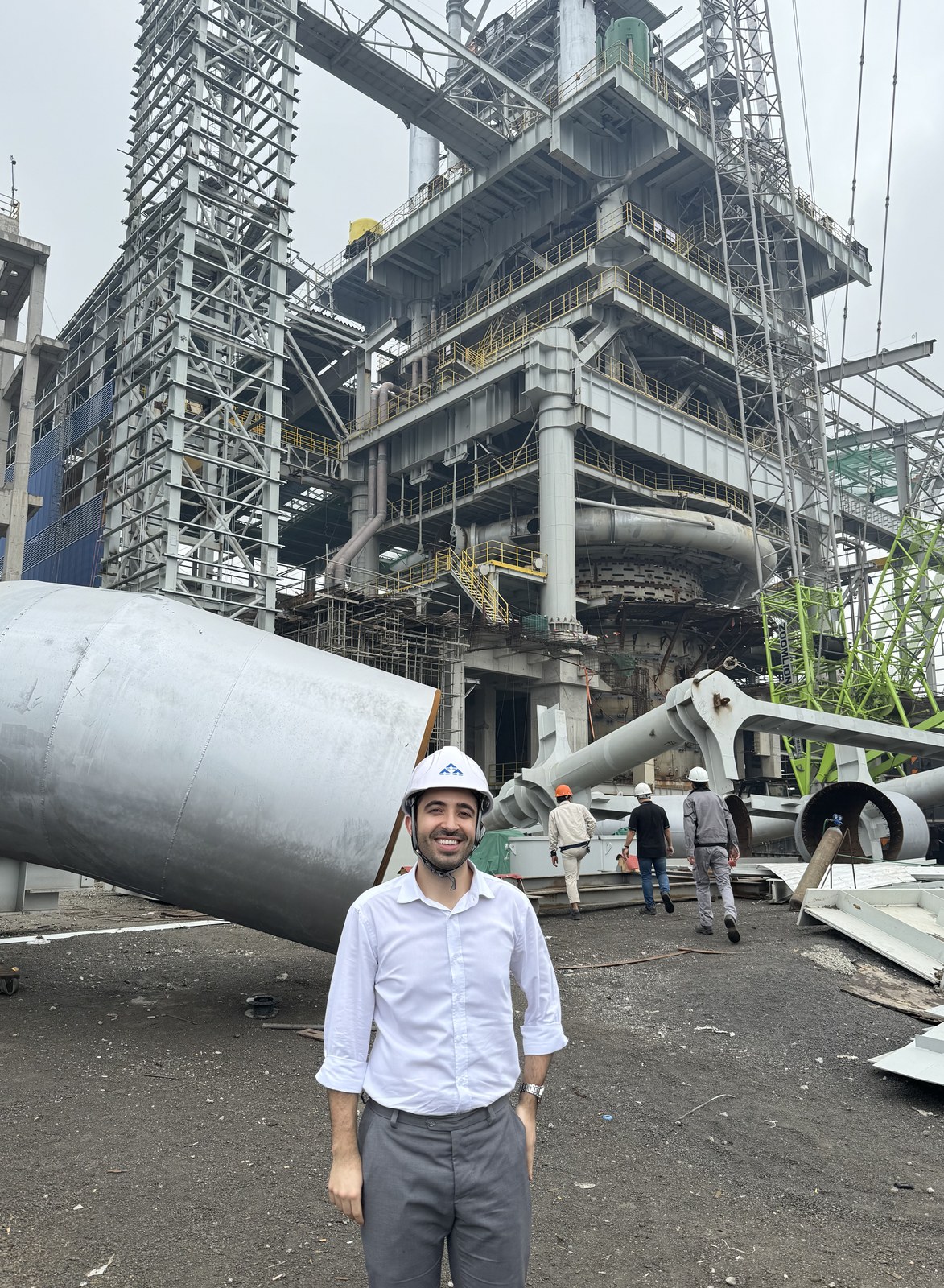
![[Photo — city, month]](/images/case-study-fontoura.jpg)
Tulio Drumond

I am an engineer. I started on the factory floor, moved into research and development, and worked up through executive technical and commercial roles across fifteen years in heavy industry.
Most of that career was at RHI Magnesita, the world's largest refractory producer, supplying the steel, cement, glass and non ferrous metal industries. I worked there across Latin America, Europe, the United States, India, China, the Far East and Oceania, moving between plants, customers and head office roles. That is where I learned how a technical failure at one plant turns into a commercial decision somewhere else in the world.
That path is why Heatworth works. I can stand in front of a furnace with a production supervisor and discuss why a technical consumable is failing, and I can sit with a director and discuss what that failure costs per tonne. Industrial sourcing usually breaks somewhere between those two conversations, because the person doing it can only hold one of them.
I am based in Shanghai. Every client works directly with me.
The Import Diagnostic
Most companies do not know where they stand. They know what they pay domestically and they have heard China is cheaper, and between those two facts there is nothing they can act on.
The Import Diagnostic closes that gap. Send three product lines: a specification, a drawing, a raw material, or the quotation you want checked against reality. You receive indicative China pricing on all three, one item taken through full landed cost with HS code and tax verification, a map of the manufacturers who can actually make it, and a written verdict on whether to import or not.
The fee is set against the size and complexity of the import, so it is quoted once we understand what you are buying. It is credited in full against the purchases you go on to make.
We do not quote for free. Screening manufacturers, verifying what they claim and building a landed cost that survives contact with customs takes weeks of work in China before a single number reaches you. Pricing it upfront is how we stay available to the companies that are serious.